CT 3D reconstruction and 3D visualization data: opengl+VTK+PCL point cloud library
I have done my work on the 3D reconstruction of the edge contour. I am very interested in seeing an introductory article on CT 3D reconstruction today.
There are six basic post-processing methods for CT three-dimensional reconstruction.
-
Multi-level reconstruction (MPR)
-
Maximum density projection (MIP)
-
Surface shadow mask (SSD)
-
Volume roaming technology (VRT)
-
Surface reconstruction (CPR)
-
Virtual Endoscopy (VE)
Multi-level reconstruction (MPR)
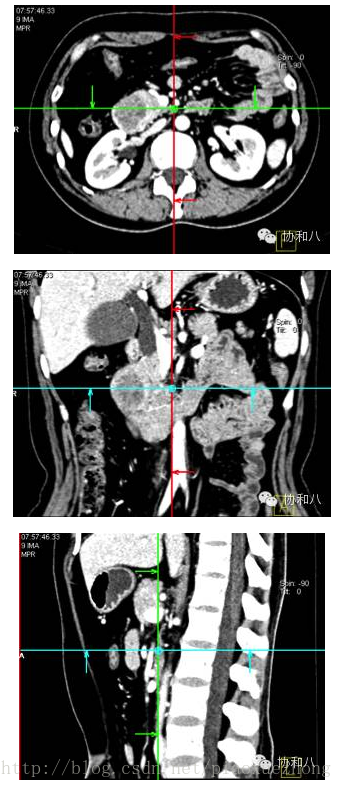
Multi-level reconstruction is the most basic "three-dimensional" reconstruction imaging method, a two-dimensional image sequence, and our most familiar axial image is a "family".
MPR is suitable for structural imaging of any plane. Observing normal tissues and lesions at any angle. It can show the cross section of the cavity structure to observe the degree of stenosis of the cavity, evaluate the invasion of blood vessels, and truly reflect the positional relationship between organs. Wait.
Maximum density projection (MIP)
The maximum density projection is to project voxels with the largest CT value in a certain thickness (ie, CT layer thickness) onto the background plane to display all or part of the blood vessels and/or organs with high density. The simple principle and image are sauce purple:
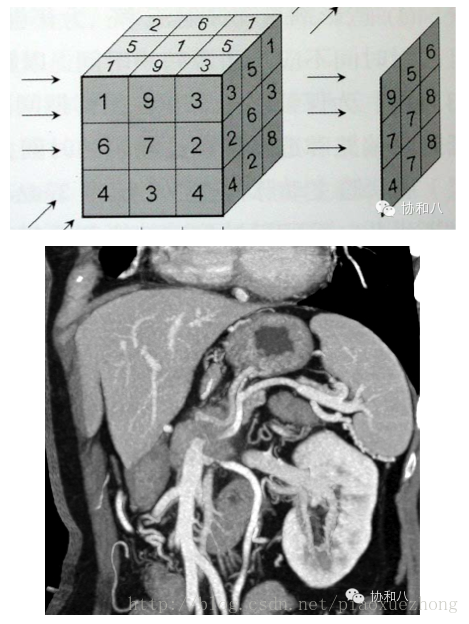
Since this method displays the voxel with the highest CT value in a certain layer thickness image, changing the layer thickness will affect the image:
Layer thickness 5mm Layer thickness 15mm
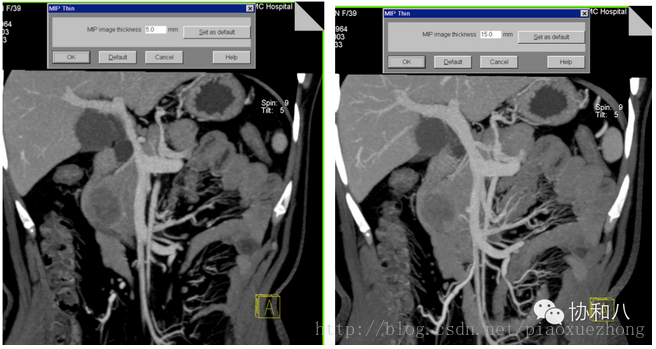
What is the swelling? Does it mean that the portal vein of the MIP image with a layer thickness of 5 mm is narrow, and the portal vein of the MIP image with a layer thickness of 15 mm is normal?
Because MIP is often used to show the movement of blood vessels (I am often used to display blood vessels? Because the blood vessels on CT are brighter than the surrounding tissue organs), the choice of layer thickness is important, neither too thin (part of the lumen of the blood vessels) It may be outside the layer thickness, and it should not be too thick (interference with surrounding tissues and organs), which is a test of the technical and clinical experience of the radiologist.
Let's compare the images of MPR and MIP below:
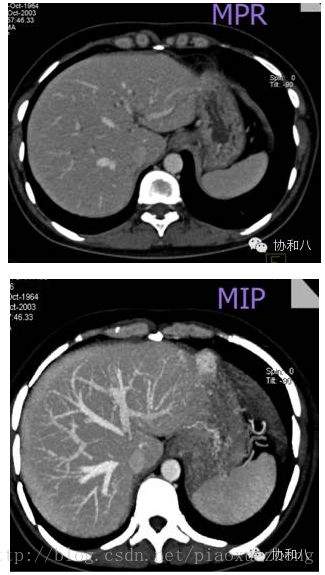
It can be seen that the continuity of the blood vessels in the MIP image is better.
The MIP technology has a twin-minimum density projection (minIP), which is the opposite of MIP, reflecting the most CT value in a certain layer thickness image.lowThe voxel, so it is often used to display the biliary, airway and other organizational structures.
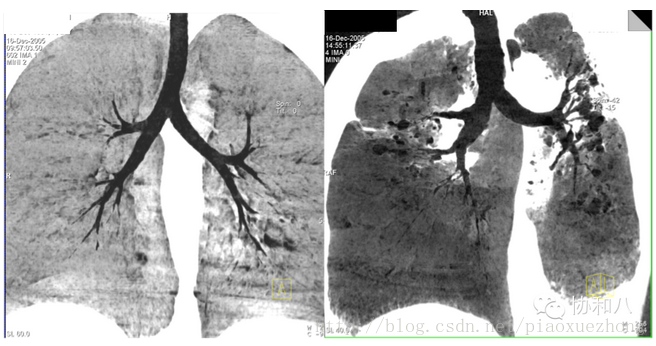
Surface shadow mask (SSD)
The surface shadow mask is to use the operator's eye as the hypothetical light source direction. When the projection is on a voxel whose CT value is above the set threshold, it will not continue to image. Only the stereoscopic image of all surface voxels will be presented, which is suitable for displaying CT. The structure of the structure is very different from other structures... (Heaven and earth conscience, I am really Chinese, if you can't understand it, continue to see below...) Speaking grounded, the SSD image is like a black and white image. Therefore, it is mainly used clinically to show bone lesions or colon CT reconstruction:
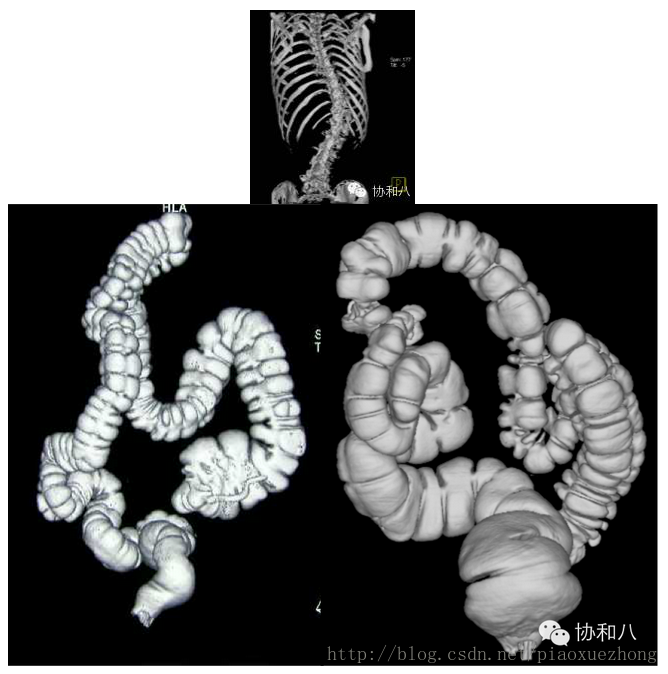
Volume roaming technology (VRT)
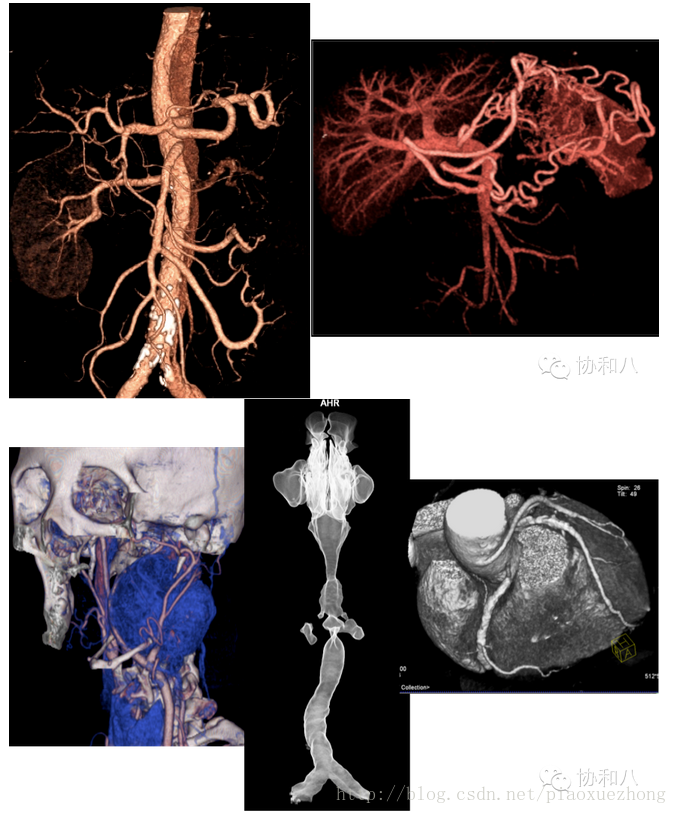
This three-dimensional imaging function is very powerful, and its shape and color are vivid. It is definitely the "Gao Fu Shuai" in CT three-dimensional reconstruction. It can form stereoscopic plastic images of arteriovenous vessels, soft tissues and bone structures, and can also display bronchial trees, colons and Structures such as the inner ear have certain advantages for imaging complex structures.
The VRT image is vivid and vivid, and is very popular among doctors. It is a big killer for assisting diagnosis and displaying lesions, but we should pay attention to it: the pseudo color setting of VRT images is very important. Inappropriate pseudo-color settings will filter out the outer pixels of the blood vessels, showing that the blood vessels are narrower than the real situation.
Surface reconstruction technology (CPR)
This reconstruction technique selects a specific curved path in one dimension, and displays all the voxels on the same plane on the same plane, and can evaluate the structures with larger curvature such as splenic artery, pancreatic duct, coronary artery, etc. at one time. The full length of the structure:
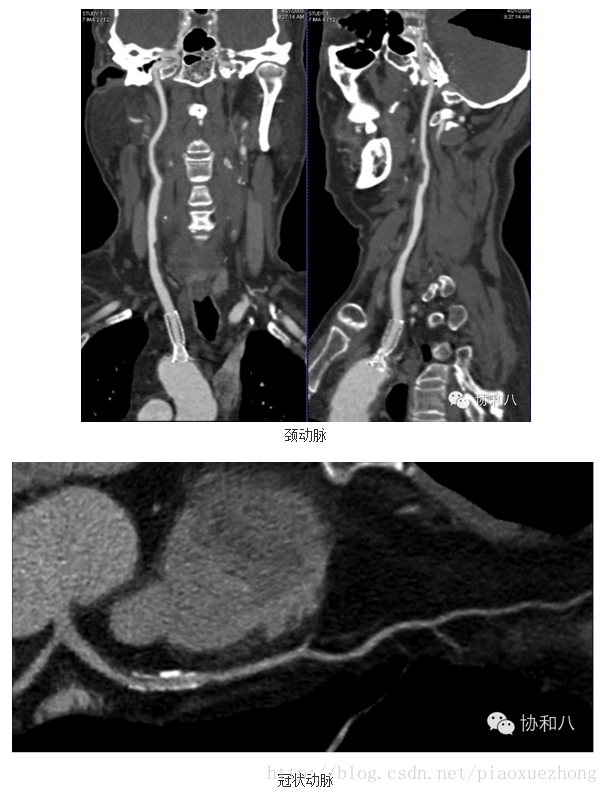
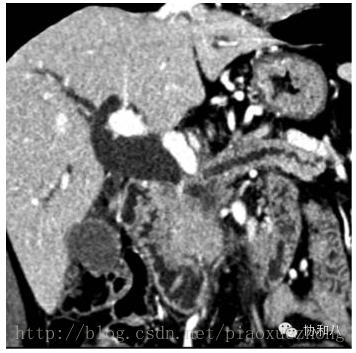
Pancreatic duct
CPR can observe the wall lesions of the lumen structure (such as plaques, stenosis, etc.), and can also observe the positional relationship between the tubular structure and the surrounding structure, but the CPR shows not the normal anatomy and relationship (it is to pull the tubular structure Straight to see), multiple angle surface reconstructions are required to fully evaluate the lesion.
Virtual Endoscopy (VE)
This CT reconstructed image can simulate the effects of various endoscopy. It is assumed that the line of sight is located in the "cavity" of the tube to be observed. By setting a series of parameter ranges, the structure in the "cavity" of the tube can be seen:
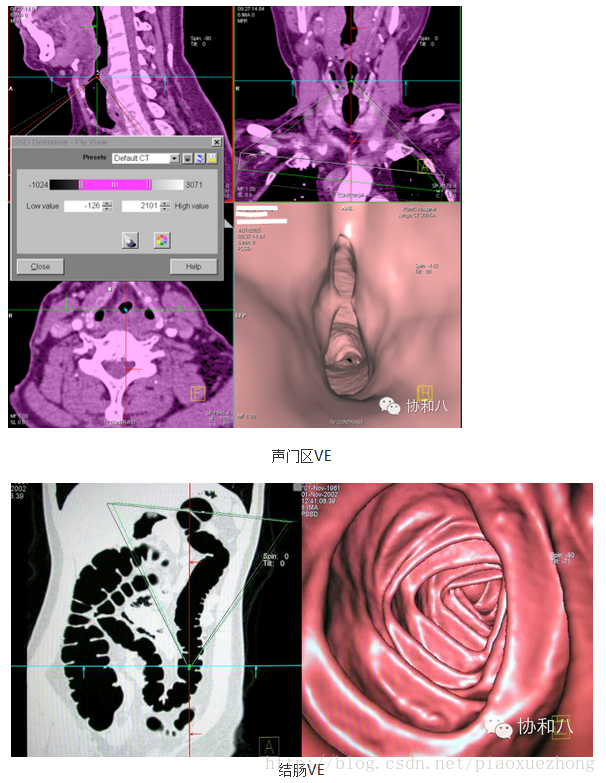
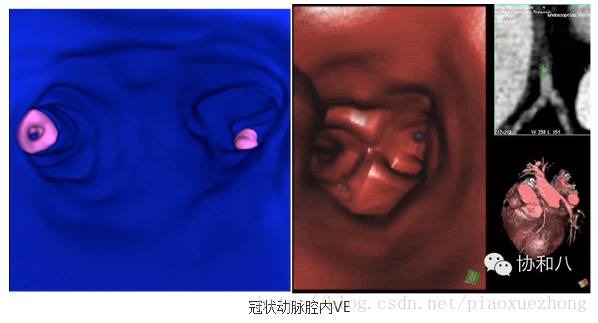
Of course, the 3D visualization method in the CT field has a widely used Marching Cube algorithm, see: http://paulbourke.net/geometry/polygonise/,Blog postWait.
The knowledge of opengl and VTK software has now collected information on this:
-
-------------opengl learning ------------
Well-known OpenGL tutorial, the biggest feature of this tutorial is to provide various versions for different platforms, different compilers, different languages. You don't have to think about using Linux/Windows, VC/BC, C++/Java/C#/VB, or even D, you can find the corresponding version. In addition to these tutorials, you can download a variety of cool demos at Nehe Productions, and quite a few of them provide source code.http://nehe.gamedev.net/data/downloads/download.asp?letter=0-9
2.http://www.ultimategameprogramming.com/
There are 100 free OpenGL tutorials covering a lot of octree, BSP, Cg, GLSL, various texture mapping techniques, and tutorials for OpenAL and Ray Tracing. The site also launched a book "Ultimate Game Programming with DirectX" that teaches you how to make a game engine. There is no Chinese translation yet.
3.http://www.lighthouse3d.com/opengl/
There are tutorials for View Frustum, GLSL, Math, Billboarding, Picking, Terrain, Display Lists, and GLUT. Some of the explanations about GLUT and Terrain are very detailed. The general tutorial website is to show some kind of rendering effect of OpenGL through a piece of code. If there is no graphic background, it is difficult to understand its principle. The website has a detailed description of each technology listed, and the related algorithms have a detailed description. You understand more deeply.
4. http://www.videotutorialsrock.com/
OpenGL video tutorials are all in English. Another advantage of watching video tutorials is that you can learn some of the tricks of the author's programming inadvertently.
Corresponding Chinese opengl learning website:
https://bullteacher.com/category/zh_learnopengl_com
From the getting started guide to the high level, it is more suitable for novices.
6.
CSDN column, about opengl3.3.
-
------------ITK and VTK learning-----------
VTK is an open source free software system for image processing, computer graphics and scientific computing visualization, and is widely used in various industries at home and abroad. VTK's homepage: https://www.vtk.org/. Found tutorial:
1.
3.
4. Video: Study_VTK_Together, https://pan.baidu.com/s/1pMJdt9p Password: awum
Recommended VTK learning resources
1. The VTK User's Guide is a book that introduces the application of the VTK library, published by Kitware.
2. The Visualization Toolkit: An Object-Oriented Approach To 3D Graphic is a textbook for the VTK User's Guide. It provides an in-depth explanation of many visualization algorithms and data structures.
3, "Source" is a quarterly publication of KitWare, which covers all open source projects of KitWare. The online access address is http://www.kitware.com/media/thesource.html
4. Insight Journal (http://insight-journal.org/) is a very valuable website for learning VTK. Users can contribute their own code to the VTK community through this website, as well as download the code uploaded by others.
ITK and OpenCV are a class of libraries, while VTK is similar to OpenGL. The difference is that ITK is more focused on medical image processing, while OpenCV is more focused on general image processing. If medical image processing is used, ITK is preferred; VTK is also an application that is more emphasis on medical image processing.
Official website: https://itk.org/
ITK Learning Website:
http://www.insight-journal.org/
http://blog.csdn.net/www_doling_net
Install ITK under VS, VTK: http://blog.csdn.net/lj695242104/article/details/24271141
Jiaotong University Medical Image Processing Video Tutorial
reference:
https://blog.csdn.net/wae42675/article/details/71922529
https://blog.csdn.net/clheang/article/details/44220843
https://blog.csdn.net/yu253/article/details/78412307
http://blog.csdn.net/zhuangxiaobin/article/details/52863276
http://blog.csdn.net/webzhuce/article/details/52004621
http://www.360doc.com/content/15/1107/17/8224347_511466699.shtml#
turn:
Intelligent Recommendation

VTK 3D reconstruction (2) - 3D reconstruction and display based on foot bone CT
Original address: [Effect demonstration] According to the photo of the bone CT scan of the foot, the reading and 3D reconstruction are completed by VTK. [program implementation] Original address: Copy...

Visualization of normal vector of 3D point cloud by OpenGL+MFC
Recently, a small partner is asking, I want to show the direction of the normal vector of each point in the obtained 3D point cloud. How to get this realistic 3D display effect? Of course, OpenGL is a...
See the knowledge of 3D point cloud dependence from the PCL library
The first time I used the PCL library, it was 2017. At that time, in order to extract the fire line (fire envelope: concave package), because the convex hull is very simple, but it does not meet the a...
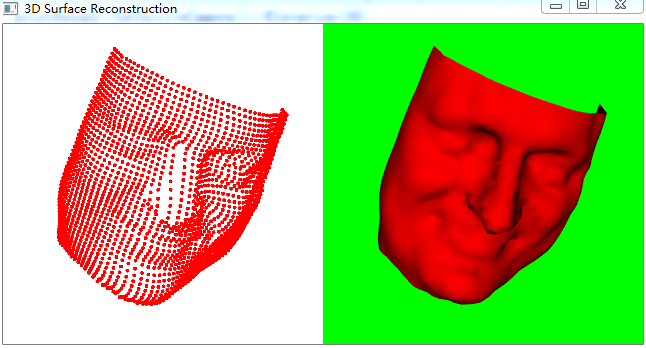
VTK practicing the Road 56: Advanced graphics elementary operations _ surface reconstruction (3D point cloud surface reconstruction)
1. point cloud reconstruction Although Delaunay triangulation algorithm can be implemented mesh surface reconstruction, but its application is mainly split in two-dimensional, three-dimensional space ...

Point cloud 3D reconstruction algorithm
Point cloud 3D reconstruction algorithm Point cloud 3D reconstruction process (1) Get of point cloud data 3D Information Acquisitions often use Mobile Mapping Systems, MMS includes mobile laser scanni...
More Recommendation
Point cloud library PCL-3D model .obj file to generate pcd, pcl point cloud files
Point cloud library PCL-3D model .obj file to generate pcd, pcl point cloud files 1.VS2019 configure PCL1.10.0 The VS2019 configuration PCL1.10.0 will not be discussed in detail here, you can refer to...
3D graphics generation, modeling, reconstruction, interactive display tutorial: VTK and OpenGL
1, read .mha file Methods: vtkmetaimageReader () 2, rendering Methods: vtkrenderer (), vtkrenderWindow () Create a rendering first, then establish a rendering window 3, int...
Processing point cloud data (3): 3D point cloud visualization
3D visualization point cloud Visualize with Mayavi First install mayavi using anaconda and open the command line interface If the python version is py3, an error will occur, and the python2.7 version ...
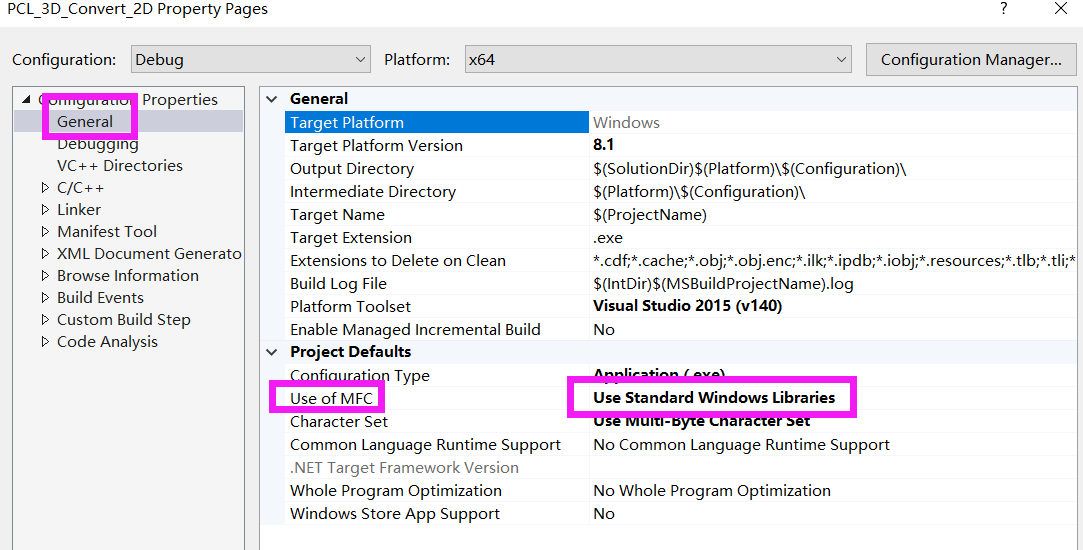
PCL converts 3D point cloud data into 2D depth images
Problems and solutions that may be encountered when running the code: 1. Problem: Error C2061 syntax error: identifier'_TCHAR' Solution: Add header file: #include <tchar.h> 2. Problem: Erro...
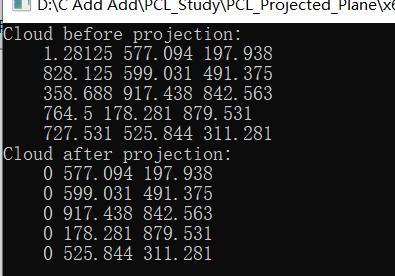
Projection of PCL 3D point cloud data to 2D plane
code show as below: Make a slight modification to solve the crash problem when running the program. The method to solve the program crash: add #include<stdio.h> to the header file and add getcha...