Shuffle two lists in the same order in python
tags: python shuffle Same order list
Usually when doing machine learning problems, you need to prepare training data, usually the sample data and labels are stored in 2 lists, such as train_x = ,train_y = . Sometimes it is necessary to shuffle the data before processing (for example, batch gradient descent algorithm, the data needs to be shuffled). At this time, you need to shuffle the two lists in the same order, so how to achieve it in python? This can be achieved by setting the same random seed and then shuffle. code show as below:
import random

randnum = random.randint(0,100)
random.seed(randnum)
random.shuffle(train_x)
random.seed(randnum)
random.shuffle(train_y)Intelligent Recommendation
Python - two lists get the same element
Article catalog Python - two lists get the same element Python - two lists get the same element Method 1: Turn into a tuple - then A & B Method 2 (While cycle method): Method 3: (FO cycle implemen...
Python judges the same elements of the two lists
Mainly use list derivatives Give an example Example 2 Example Example...
Put two sets of data together in python shuffle in a fixed order
Sometimes two sets of data, such as features and labels, need to be randomly shuffled together, but you want to record this shuffled order, so what should you do? Here is a good method: Output: If you...
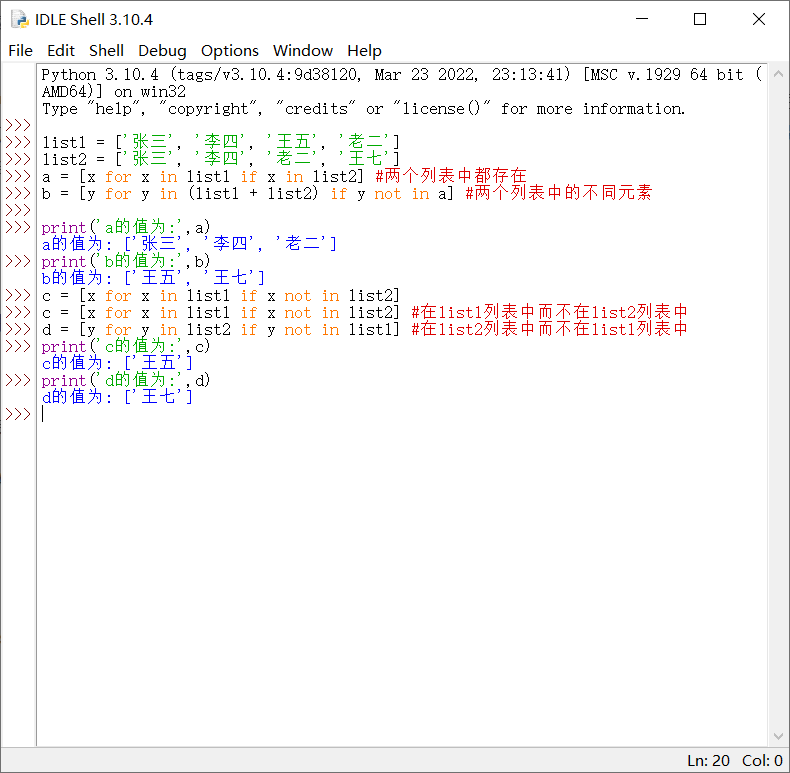
Two LISTs have the same elements and the number of the same elements in Python
Article catalog Reference URL Judging whether two LISTs have repeated elements Method 1, use traversal Method 2 Judgment different values in two lists Elements in LIST1 in List2 Elements in LIST2 Re...
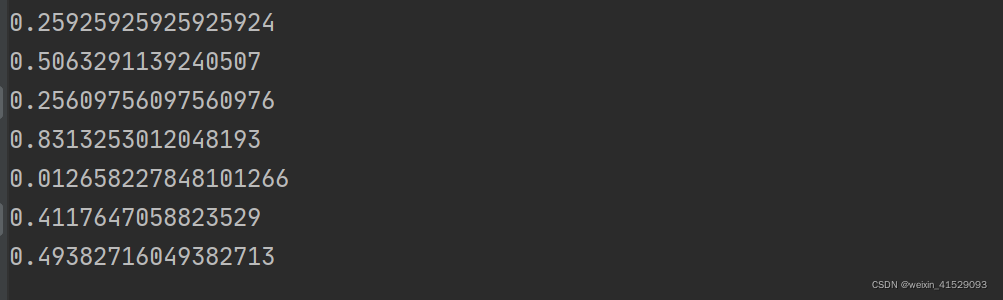
Python two lists the same number -the number of two lists, see if the number is the same in the index position
As a draft, please skip the big man. Listft_targetandft_pre...
More Recommendation
Scramble multiple lists in the same order
Scramble (shuffle) multiple lists using the same sequence Can be used for network training to disrupt the training data tags without changing the correspondence Method one: np.random.shuffle (no retur...
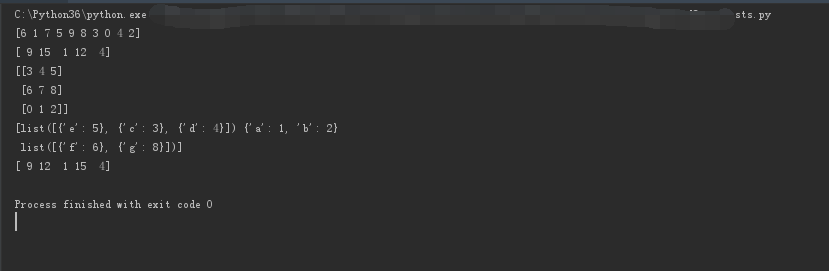
The difference between using shuffle and permutation to randomly shuffle lists in python
Results of the: Function: permutation returns a random list of the permutation range or returns a new array in a disordered order without changing the original array, If the input is a multi-di...
[Leetcode] [Python] Merge Two Sorted Lists / Two Order Linches
Topic Merge two row Solution ideas It has begun to be used as two LISTs to modify their values, but it should be modified by the pointer to the list. and there is also a notes that Dummy Node, see Sum...
Two ways to combine two order linked lists (Python)
Leetcode link Iteration time complexity o (n + m) Recursive time complexity o (n + m)...