The difference and use of crystal crystal and osilator crystal oscillator
Problem description: The use of MCU, MPU, and CPU is inseparable from the problem of crystal oscillator, because PLL needs to be used, crystal oscillator is equivalent to the heartbeat of MCU. I have encountered different use of crystal oscillators before. The smallest MCU system generally requires an external crystal oscillator. The crystal oscillator is not directly built into the IC. It should be a factor that the crystal oscillator takes up a lot of space and has strong interference. However, Silicon Lab's C8051Fxxx chip has a crystal oscillator built in, so there is no need for an external crystal oscillator. After the power management circuit is designed, the smallest system can run.
Some situations: There are actually many types of crystal oscillators. The previous 8-bit MCUs such as STC89C51 generally use a 12M crystal oscillator, and then add two about 30pF capacitors to the XTAL1&XTAL2 pins of the IC. There are also 32.768K cylindrical crystal oscillators for RTC, as well as four-pin crystal oscillators, which have power pins and ground pins, and then use one pin to output the oscillation to the IC. In view of this, collect some information from the Internet to further understand and learn about this very important original crystal oscillator.
General classification: passive crystal oscillator and active crystal oscillator two types.
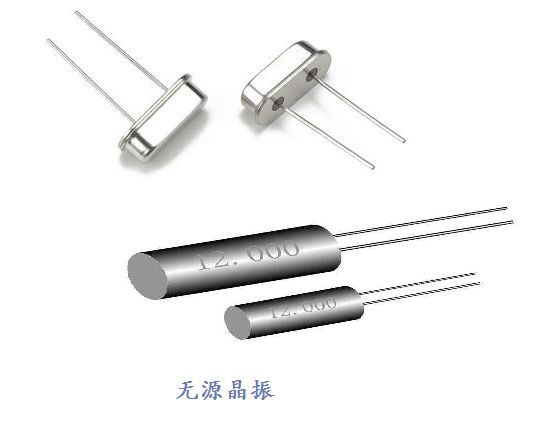
Passive crystal oscillator-crystal (crystal), which requires the help of a clock circuit to generate an oscillating signal, generally connected to two pins;
Active crystal oscillator-oscillator (oscillator). A complete resonant oscillator, the resonant oscillator includes quartz (or its crystal material) crystal resonator, ceramic resonator, LC resonator, etc.
Principle of crystal oscillator: The quartz crystal can be used as an oscillator circuit (resonance) based on its piezoelectric effect. It is known from physics that if an electric field is applied between the two plates of the crystal, the crystal will be mechanically deformed; The application of mechanical force between the plates will generate an electric field in the corresponding direction. This phenomenon is called the piezoelectric effect. If an alternating voltage is applied between the plates, it will produce mechanical deformation vibration, and at the same time, the mechanical deformation vibration will produce an alternating electric field. Generally speaking, the amplitude of this mechanical vibration is relatively small, and its vibration frequency is very stable. But when the frequency of the applied alternating voltage is equal to the natural frequency of the wafer (determined by the size of the wafer), the amplitude of mechanical vibration will increase sharply. This phenomenon is called piezoelectric resonance, so quartz crystal is also called quartz crystal resonator . It is characterized by high frequency stability. (It seems that the principle of resonance is used. It feels a bit roundabout. The alternating electric field generates mechanical vibration, and then the mechanical vibration generates an alternating electric field for use. Why not use the original alternating electric field directly? The reason should be the original alternating electric field. The variable electric field may not be stable enough, the frequency will change within a certain range, and the alternating electric field generated by the crystal resonance should be very stable, which overcomes the problem of frequency changes. A stable frequency is very important for the normal operation of the IC ).
Detailed classification comparison:
1. Passive crystals-passive crystals need to use the on-chip oscillator of the DSP, and there is a suggested connection method on the datasheet. Passive crystals do not have voltage problems. The signal level is variable, that is to say, it is determined according to the oscillator circuit. The same crystal can be applied to a variety of voltages and can be used for DSPs with different clock signal voltage requirements. And the price is usually low, so for general applications, if conditions permit, it is recommended to use crystals, which is especially suitable for producers with abundant product lines and large quantities. Compared with crystal oscillators, the defect of passive crystals is poor signal quality, which usually requires precise matching of peripheral circuits (capacitors, inductances, resistances for signal matching, etc.). When replacing crystals with different frequencies, the peripheral configuration circuits need to be adjusted accordingly. . It is recommended to use high-precision quartz crystals, as far as possible, do not use low-precision ceramic crystals.
2. Active crystal oscillator-active crystal oscillator does not require the internal oscillator of DSP, the signal quality is good, relatively stable, and the connection method is relatively simple (mainly to do a good job of power filtering, usually a PI type filter network composed of capacitors and inductors , The output can be filtered with a small resistance resistor), no complicated configuration circuit is required. The usual usage of active crystal oscillator: one pin is suspended, two pins are grounded, three pins are connected to output, and four pins are connected to voltage. Compared with passive crystals, the disadvantage of active crystal oscillators is that their signal level is fixed, and a suitable output level needs to be selected, which is less flexible and expensive. For applications with sensitive timing requirements, I personally think that an active crystal is better, because you can choose a more precise crystal, or even a high-end temperature compensation crystal. Some DSPs have no internal oscillator circuit and can only use active crystals, such as TI's 6000 series. Compared with passive crystals, active crystals are usually larger in volume, but many active crystals are now surface-mounted, and the volume is equivalent to crystals, and some are even smaller than many crystals.
Some notes:
1. The DSP that needs frequency multiplication needs to configure the PLL peripheral configuration circuit, mainly isolation and filtering;
2. The crystal oscillators below 20MHz are basically fundamental frequency devices with good stability. Most of the ones above 20MHz are harmonics (such as the third harmonic, the fifth harmonic, etc.), and the stability is poor, so it is strongly recommended Using low-frequency devices, after all, the peripheral configuration required by the PLL circuit for frequency multiplication is mainly capacitance, resistance, and inductance. Its stability and price are far better than crystal devices;
3. The length of the clock signal trace should be as short as possible, the line width should be as large as possible, and the distance from other printed lines should be as large as possible, close to the device layout and wiring, if necessary, go to the inner layer and surround it with a ground wire;
4. There are special design requirements when importing clock signals from the outside through the backplane, and you need to refer to related materials in detail.
5. In addition, there are some explanations:
(1) Generally speaking, the stability of crystal oscillators is better than crystals, especially in precision measurement and other fields. Most of them use high-end crystal oscillators, so that various compensation technologies can be integrated and the design is reduced. Complexity. Just imagine, if you use a crystal and then design your own waveform shaping, anti-interference, and temperature compensation, what will be the complexity of the design? We use high-precision temperature-compensated crystal oscillators for designing RF circuits and other occasions with high clock requirements. Industrial grades cost several hundred yuan each.
(2) If you cannot find a suitable crystal oscillator for special applications, that is to say, the complexity of the design exceeds the level of finished crystal oscillators on the market, you must design it yourself. In this case, you must choose crystals, but these crystals are definitely Not ordinary crystals on the market, but special high-end crystals, such as ruby crystals and so on.
(3) The situation in areas with higher requirements is more special. The clocks used in our high-precision testing are even provided by atomic clocks, rubidium clocks and other equipment. They are connected through special radio frequency connectors. It is a large device and quite heavy.
(4) Crystal oscillator: the collective name of the so-called quartz crystal resonator and quartz crystal clock oscillator. However, since more resonators are used in consumer electronic products, the general concept of crystal oscillator is equivalent to resonator understanding. The latter is usually referred to as Zhong Zhen.
————————————————
Copyright statement: This article is the original article of the CSDN blogger "suxiang198". It follows the CC 4.0 BY-SA copyright agreement. Please attach the original source link and this statement for reprinting.
Original link: https://blog.csdn.net/suxiang198/article/details/46811869
Intelligent Recommendation

Crystal
The difference between crystal and crystal Crystals (the Crystal), the circuit is generally abbreviated as the XTAL, the need for additional clock circuitry to output a clock signal, it is generally c...
RTC-crystal oscillator
The main indicator of crystal oscillator Phase noise It is mainly the deviation of the crystal frequency from the frequency in a short period, which can be obtained by frequency domain conversion. The...
How crystal oscillator works
Crystal or Jingzhen, or silly? Crystal is short for crystal resonator (Crystal), also known asPassive crystal. Generally, it is an electronic component that uses the piezoelectric effect of quartz cry...
Explanation and application of crystal oscillator
1. The concept of crystal oscillator The crystal oscillator refers to the slice (referred to as the wafer) cut from a piece of quartz crystal at a certain azimuth angle. The quartz crystal resonator i...
Detailed test of crystal oscillator
Precautions for oscilloscope testing crystal oscillator Crystals generally output sine waves, and active crystal oscillators output sine waves or square waves. If the active crystal oscillator incorpo...
More Recommendation
The working principle of crystal oscillator
Crystal or crystal, or is it silly to distinguish? Crystal is the abbreviation of crystal resonator (Crystal), also known asPassive crystal. Generally, it is an electronic component that uses the piez...
Types of crystal oscillator
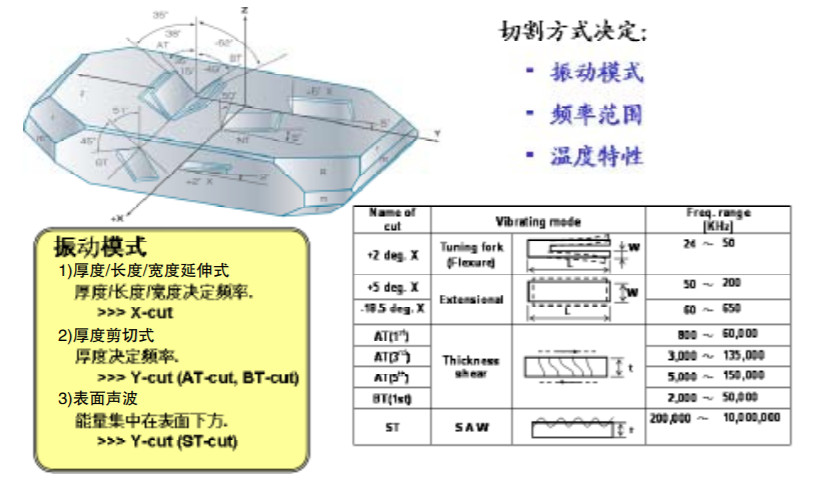
Cutting method The main frequency characteristics of a crystal oscillator depend on its internal crystal unit. The characteristics of the crystal unit depend on the cutting process. Different cutting ...
STM32 circuit crystal oscillator
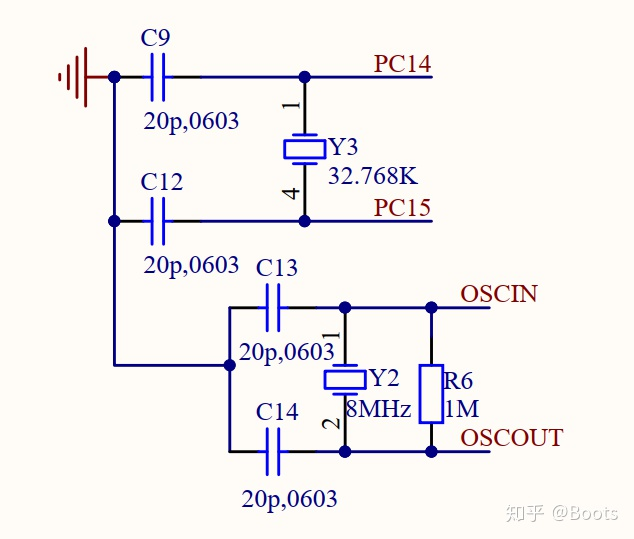
The crystal oscillator is composed of a quartz crystal. The reason why a quartz crystal can be used as an oscillator is based on its piezoelectric effect: adding an electric field to the two poles of ...
Crystal Oscillator Circuit
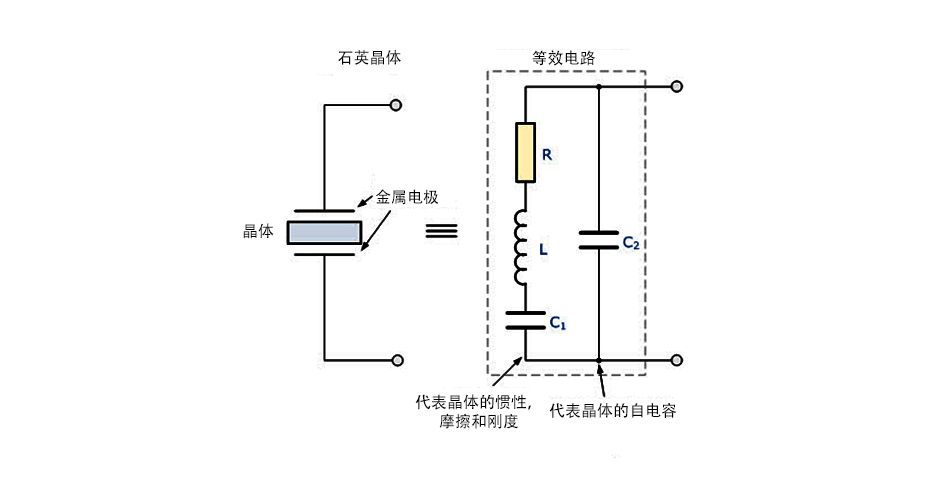
Crystal oscillator circuit and working principle crystal oscillatoris an electronic oscillator circuit for the mechanical resonance of a vibrating cryst...
The role of microcontroller crystal oscillator
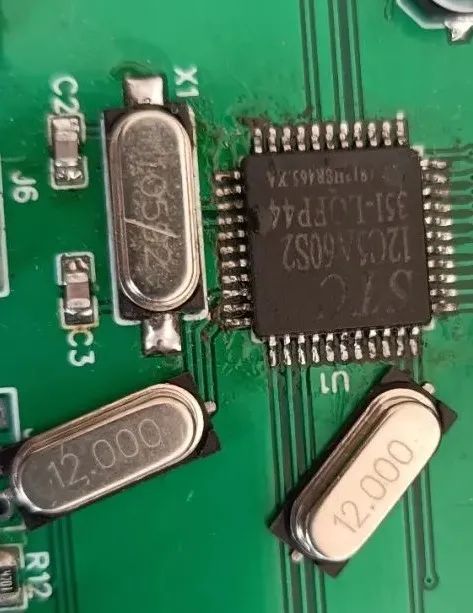
Crystal oscillator, also known as crystal oscillator, is usually divided into two types: active crystal oscillator and passive crystal oscillator. Passive crystal oscillator is generally called crysta...